

For aspiring programmers or career changers, there’s no shortage of ways to build your skills. The challenge is knowing where to turn and which options are worthwhile. Two of the most popular ways to learn programming skills online are through an online degree or a coding bootcamp.
Those who benefit the most from either an online degree or a bootcamp are generally looking for two things that can be hard to find in the same environment: flexibility and structure. This allows students to build their skill set and pivot careers without putting their lives on hold.
While people might go into either program with the same goal and looking for the same flexibility, they offer different advantages and potential drawbacks.
Bootcamps vs. Degrees At A Glance
| Coding Bootcamp | Online Degree | |
| Time Commitment | 3-6 months, can be a year or more if pursuing part-time | 2-4 years depending on pace of study and transfer credits |
| Content | Specialized. Usually covers one specific tech stack | Broad. Covers programming tools, advanced math, and key theories in the field of computing |
| Recognition | Less recognized; very important to develop a strong portfolio | Regionally-accredited degrees still hold weight in industry hiring, but a portfolio is still needed |
| Support & Network | Smaller, but more tight-knit. Will likely have program Slack/Discord and job prep exercises built in | Broader alumni bases can help with job searches, as can university career support services |
| Cost | $3,000 – $20,000 | $7,300 – $50,000 |
Time Commitment
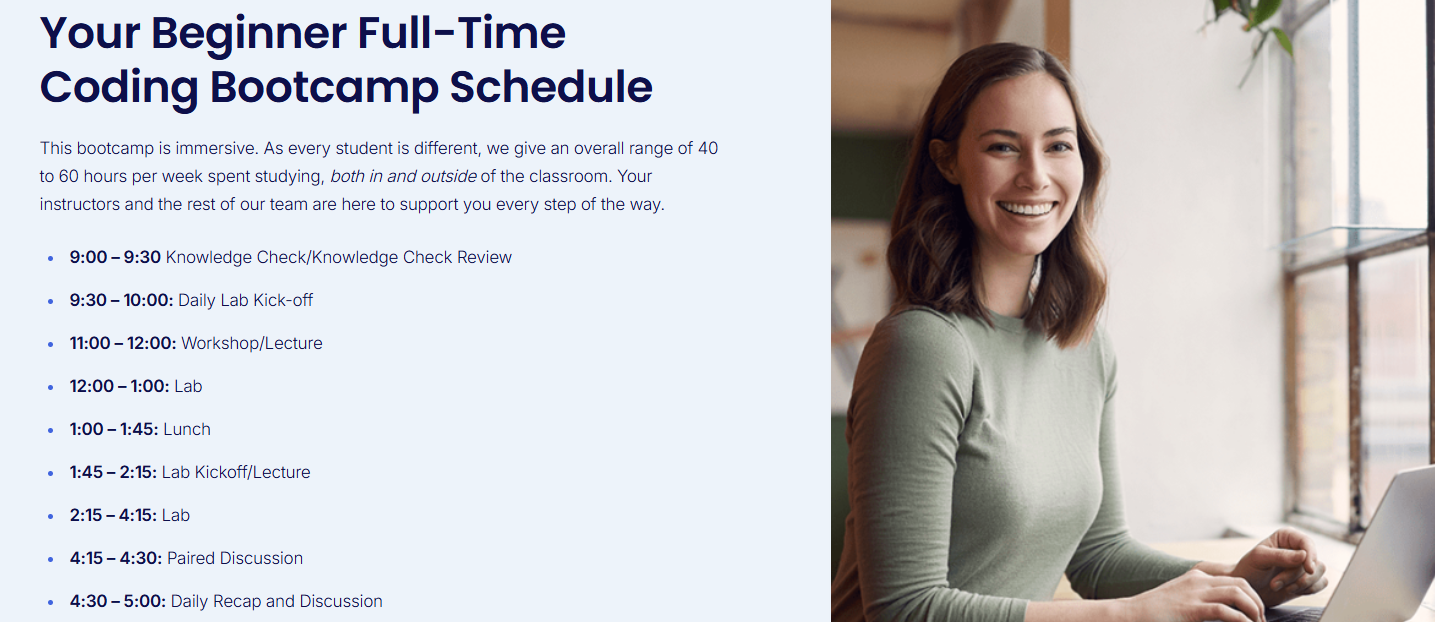
This is one area where coding bootcamps may have the edge on paper. Most popular coding bootcamps (from providers like General Assembly, Hack Reactor, or App Academy) take anywhere from 3-6 months. If it’s an extensive program that you’re pursuing at a part-time pace, it can take up to a year. But this is a narrower scope and faster timeline than any degree. If your goal is to develop foundational coding skills as fast as possible, a bootcamp may make a lot of sense.
That said, bootcamps (especially full-time ones) may have schedules that conflict with a traditional 9-5 job or with family obligations if you’re a working parent. Even if a program has a shorter timeline to completion than another option, you’ll need to be sure that you can commit to the schedule the program requires for its entire duration. Others may have more asynchronous elements, but you’ll need to get a full understanding of that before enrolling.
By contrast, online degrees tend to take anywhere from 2-4 years to complete. If you have previous college credit, many online universities have generous transfer credit policies that can shorten your timeline. Always contact the school, however, to make sure that your credits apply.
Online degrees are generally built for working adults, so they tend to offer time flexibility and asynchronous program delivery. Ideally, you’ll want to look for a program with flexible yet clear deadlines that you can plan your life around.
With either option, how much time per week you’re able to commit makes a big difference. Going through a program at a full-time pace (40+ hours per week) will cut your timeline to completion in half compared to a part-time pace (around 20 hours per week). Before investing in either option, make sure you build study and class time into your schedule.
Program Content
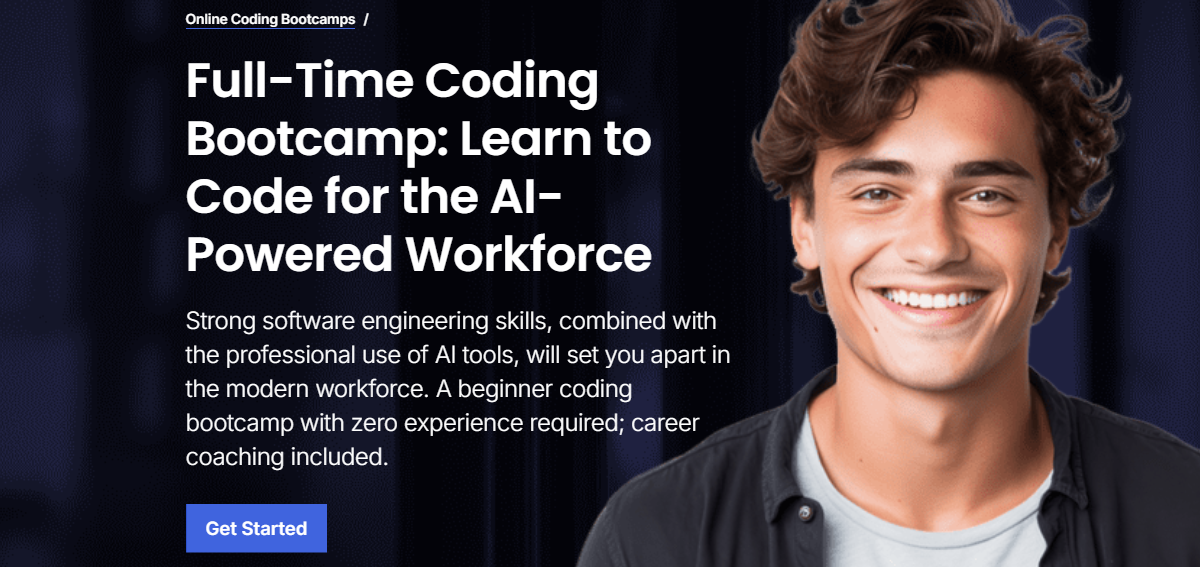
In terms of the depth and breadth of content, there’s no denying that you’ll learn more from a degree. Bootcamps typically offer condensed and focused training in a specific IT skill or tech stack. For example, Hack Reactor’s program (one of the most popular bootcamps out there) focuses primarily on JavaScript and React in its 12-week track, while it adds Python in its 16-week track. Most bootcamp providers will offer multiple courses or variations of the same course, which allows you to choose the one that best fits your goals, existing skill set, and budget.
By contrast, degrees provide a broad, theoretical foundation in various skills across the tech field. A typical Computer Science degree will include courses in data structures, algorithms, advanced math (calculus-level and above), computer architecture, and other principles of software engineering. An Information Technology degree will have a more applied focus, but will still broadly cover network administration, cybersecurity, database management, and systems integration (along with statistics and discrete math).
While a bootcamp will prepare you to use the on-the-job tools that programming roles require, a degree can give you an edge due to the depth and breadth of knowledge you’ll develop and the opportunities you’ll have to apply critical thinking. With a broader skill set, you may be able to solve a wider variety of problems for potential employers and become more valuable as a result.
Degrees can also lead to multiple industry certifications if they’re structured in the right way. Western Governors University’s degree in Information Technology, for example, includes more than ten industry certifications from industry leaders like Oracle, CompTIA, and ITIL. These credentials can be helpful on their own in building your resume and portfolio, and are a great complement to either a bootcamp or a degree program.
Recognition from Employers
Estimates vary on how many jobs require a degree these days. Nevertheless, a significant portion of software developer, IT specialist, or other programming roles still require or “prefer” candidates who have relevant degrees. A recent study by Harvard Business School’s Burning Glass Institute shows that fewer than one in 700 applicants get hired without a degree.
The most respected online credentials will be regionally accredited degrees from non-profit institutions. If your degree has a strong reputation in the specific niche you want to go into, that’s even better.
Regardless, neither credential guarantees that any particular company will hire you. Whichever option you choose, it’s important to work on your portfolio to showcase projects or products you’ve been a part of. More so than ever, employers are reporting that they value demonstrated skills in their hiring processes, regardless of how applicants developed those skills.
Institutional Support and Peer Network
Both bootcamp providers and universities can claim to offer strong peer networks and relevant job training support. What you gain differs, though, based on the program modality.
From bootcamps, you’ll gain a smaller network, but also one that may be more tight-knit. Full-time students might develop the strongest peer relationships, as they’re spending 40+ hours a week working side-by-side with their fellow coders. Part-time students can still join live sessions and participate in group projects and code reviews. Reviews vary by program in terms of the instruction quality and peer support, so that’s a factor to consider before enrolling in any program.
Most bootcamp programs have active communities on platforms like Slack or Discord, where participants and alumni stay in touch and post jobs or advice specifically for graduates of that program. This support can be very helpful in landing your first technical role. Activities like resume reviews or mock technical interviews are sometimes built into a bootcamp’s curriculum. Programs vary in how much direct support you receive from experts, so that’s another factor to think about if you’re considering a bootcamp.
Online universities, by contrast, may not offer as much direct connection to your peers, but they work to serve their students where they can. Schools like University of the People often have mentorship programs, career coaching services (like resume reviews and interview prep), as well as a dedicated database with jobs and internship listings for students. Over 80% of their graduates get jobs relevant to their new degrees, so students have a massive, widespread alumni network to tap into. You’ll need to seek these out and utilize these resources actively to benefit from them, as they may not be built into your class curriculum.
To connect alumni networks, universities typically utilize large platforms like LinkedIn and Facebook groups. While you won’t know most of the people in those groups directly, studies show that fellow professionals are anywhere from two to five times more likely to respond to cold outreach if it comes from someone who attended their alma mater. This can help you secure referrals, interviews, or even job opportunities that may not be open to you otherwise.
Cost

Because of their smaller scope, most bootcamps are more affordable than most college degrees. Bootcamps can run anywhere from $3,000 to over $20,000. While some bootcamps offer deferred tuition models or income share agreements to manage the up-front cost, you will still be responsible for the whole cost of the program.
As a cost-effective alternative to bootcamps, there are a handful of self-paced programs out there (like freeCodeCamp, Harvard’s CS50x course, and The Odin Project) that teach you and let you practice programming skills for free. It is completely possible to learn coding and master programming languages on your own with one of these. However, it’s very difficult for most people to keep up the self-discipline needed to master these skills without external support and accountability. Plus, bootcamps and degrees provide you with the built-in opportunities you may need to create a job-worthy portfolio.
On paper, degrees usually cost more. Most degree programs charge per term (for example, Western Governors University charges $3,725 per six-month term) or per credit (Southern New Hampshire University and Purdue Global both charge $300-400 per credit). For some public universities, the cost also varies based on whether or not you’re an in-state student.
While the sticker price for degrees tends to be higher, there may also be more paths to reducing your cost. Many of these programs are eligible for federal financial aid, or FAFSA, if you’re based in the U.S. That can include Pell and other grants if you’re pursuing your first Bachelor’s degree.
Nevertheless, there’s one notable exception to this trend worth highlighting, and it offers a regionally accredited degree at a bootcamp price. University of the People is a not-for-profit, online university that offers its Computer Science degree tuition-free. When you factor in course assessment fees and your application fee, the total degree cost comes out to just $7,300. That’s less than most bootcamps, and could be even less if you have previous college credits that transfer in.
In Conclusion

If you’re looking for the quickest way to master one or two tech stacks and start applying for programming roles, a bootcamp can get you there. If you’re looking to build a broadly applicable, highly valued skill set and want to do it over time while managing other obligations, a degree can be a practical, accessible, and affordable choice. Either way, you’ll want to make sure that you’re getting as much return on your investment as possible and that whatever program you choose makes sense for your lifestyle and goals.

- Online Degrees vs Coding Bootcamps: Which Is Right For You? - November 9, 2026
- CCNA vs CCNP-Which Certification is Best for You? - March 30, 2021
- The Network Administrator Job Description and Salary Guide - July 21, 2020



No Comments